Visual literacy improves from the diagnosis.
Ullada shows the visual literacy of each student and of the whole class: how they read images, how they rotate objects in their mind and how they move from 3D to 2D. In 45–55 minutes, with no grades, teachers know where to start.
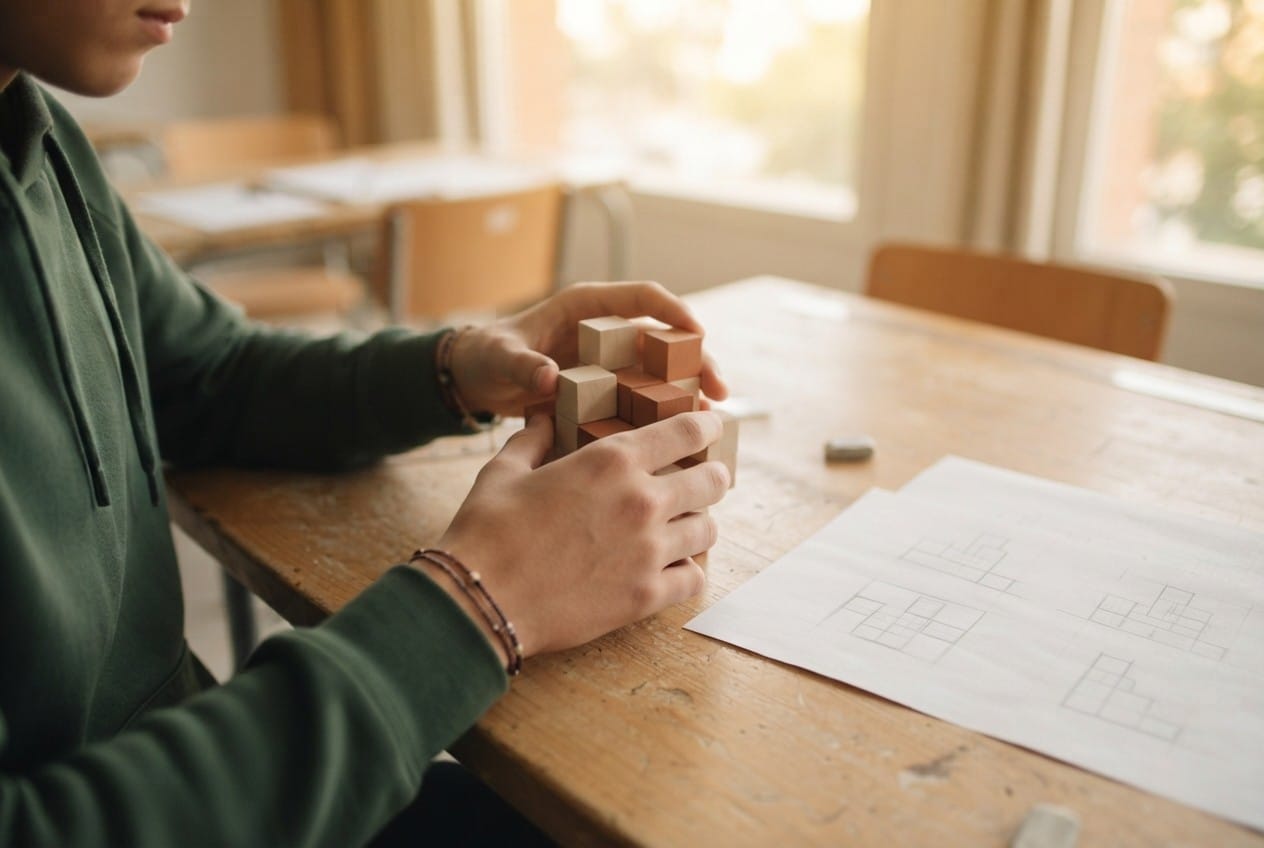
Are you a student? Start here
Every day we look at more images than we read texts.
Social media, advertising, charts, plans, video tutorials... Visual literacy matters more and more, both for learning and for not being misled. Yet the curriculum assumes students already know how to look, and it is almost never measured.
Reading images
Understanding what a poster or an ad says, and how it says it, is a citizenship skill.
Thinking in space
Spatial reasoning is linked to success in science, technology and engineering, and it can be trained: it improves with practice.
Representing
Moving from an object to its views, and back, is the basis of technical drawing, architecture and design.
Three blocks, one single test.
Visual reading
Elements of visual language, shots and framing, symbols and the intention behind ads.
Spatial reasoning
Mental rotation, point of view, nets, paper folding and cross-sections.
Representation systems
From perspective to orthographic views and back, the missing view and descriptive geometry.
The core is the same for everyone. Years 9–10 and upper secondary add extension items. Years 7–8 take it in two short sessions.
A report for every student, with no rankings.
At the end, each student sees their level in each block, their strengths and one concrete tip to improve. Nobody is compared with anyone: it is a metacognition tool, not a grade.
Recognises isolated elements; finds it hard to relate or transform them mentally.
Identifies elements and solves simple transformations.
Analyses, interprets and moves from 3D to 2D confidently.
Interprets critically and works with representation systems independently.
This is how visual literacy is practised.
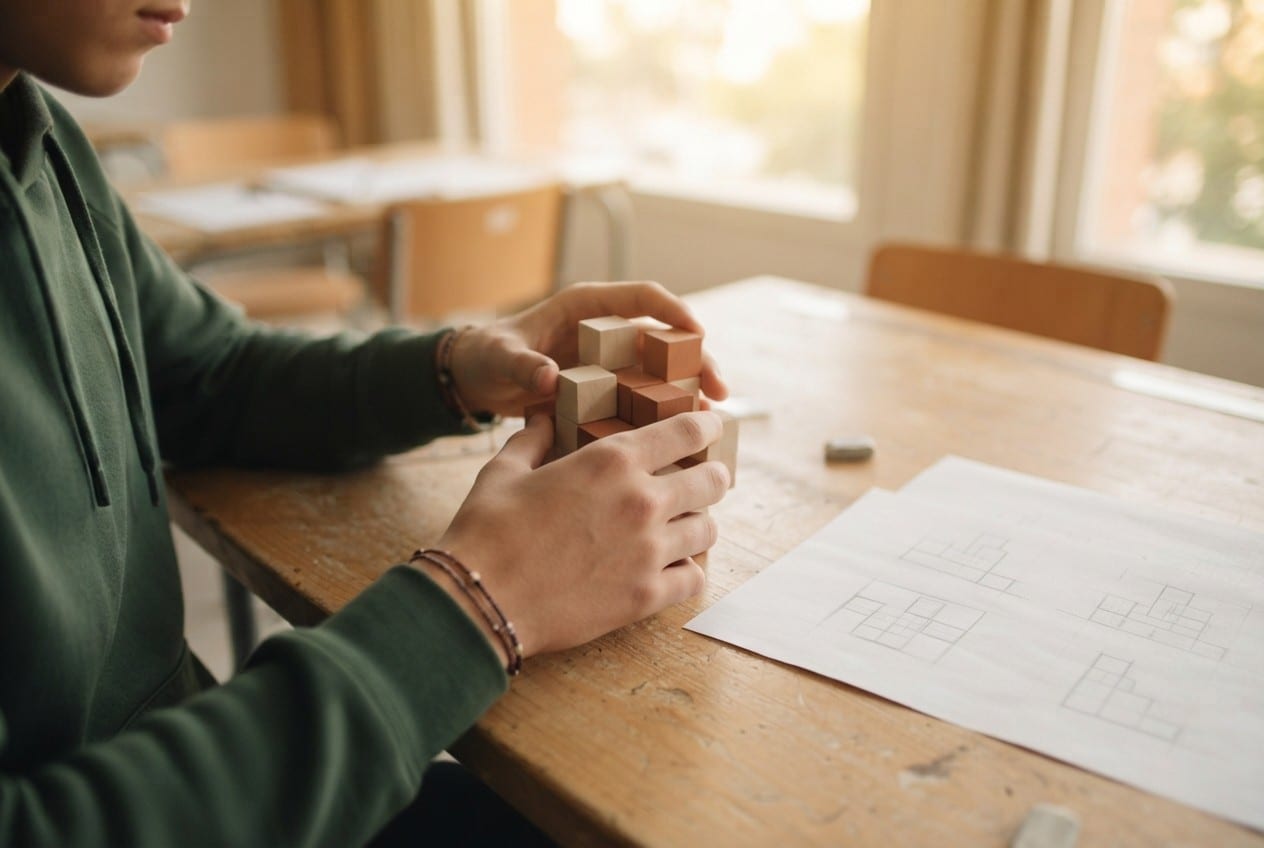
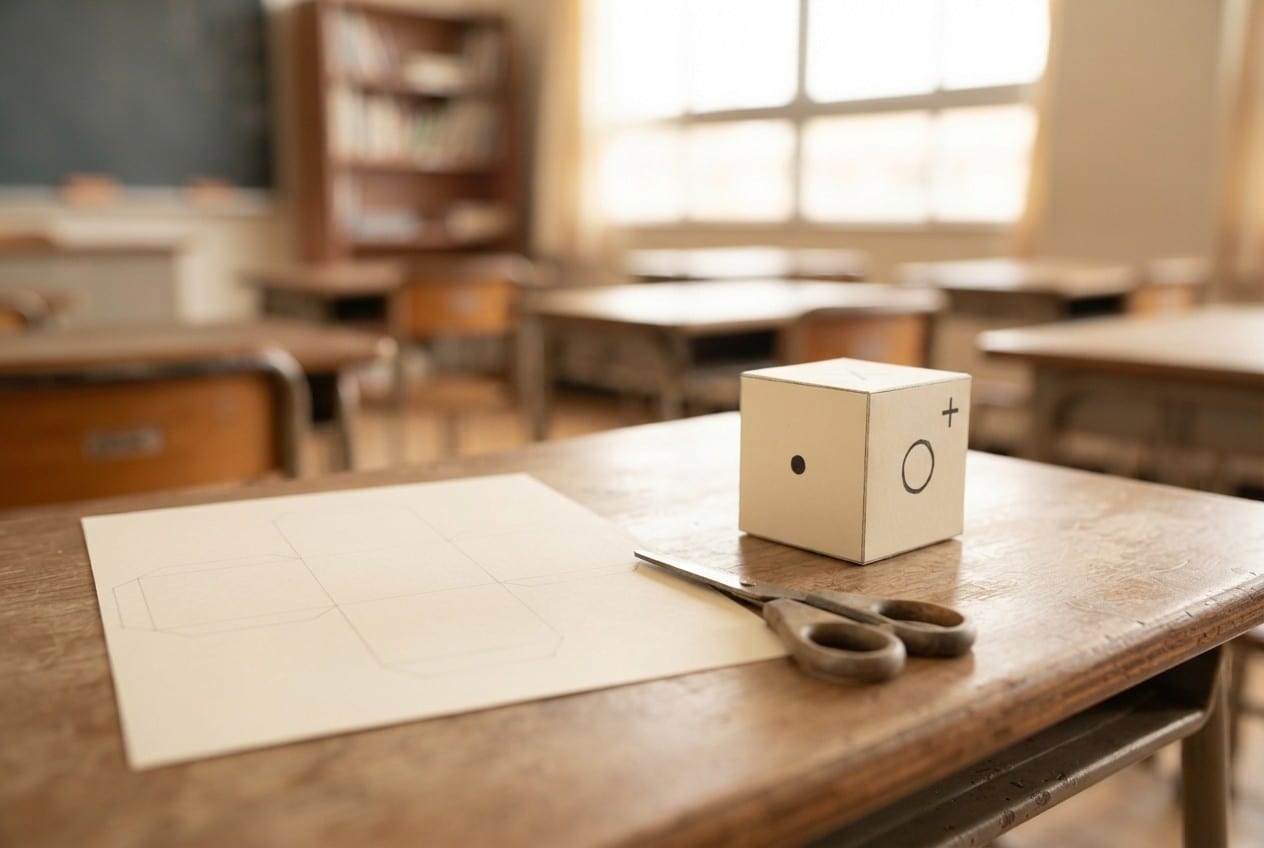
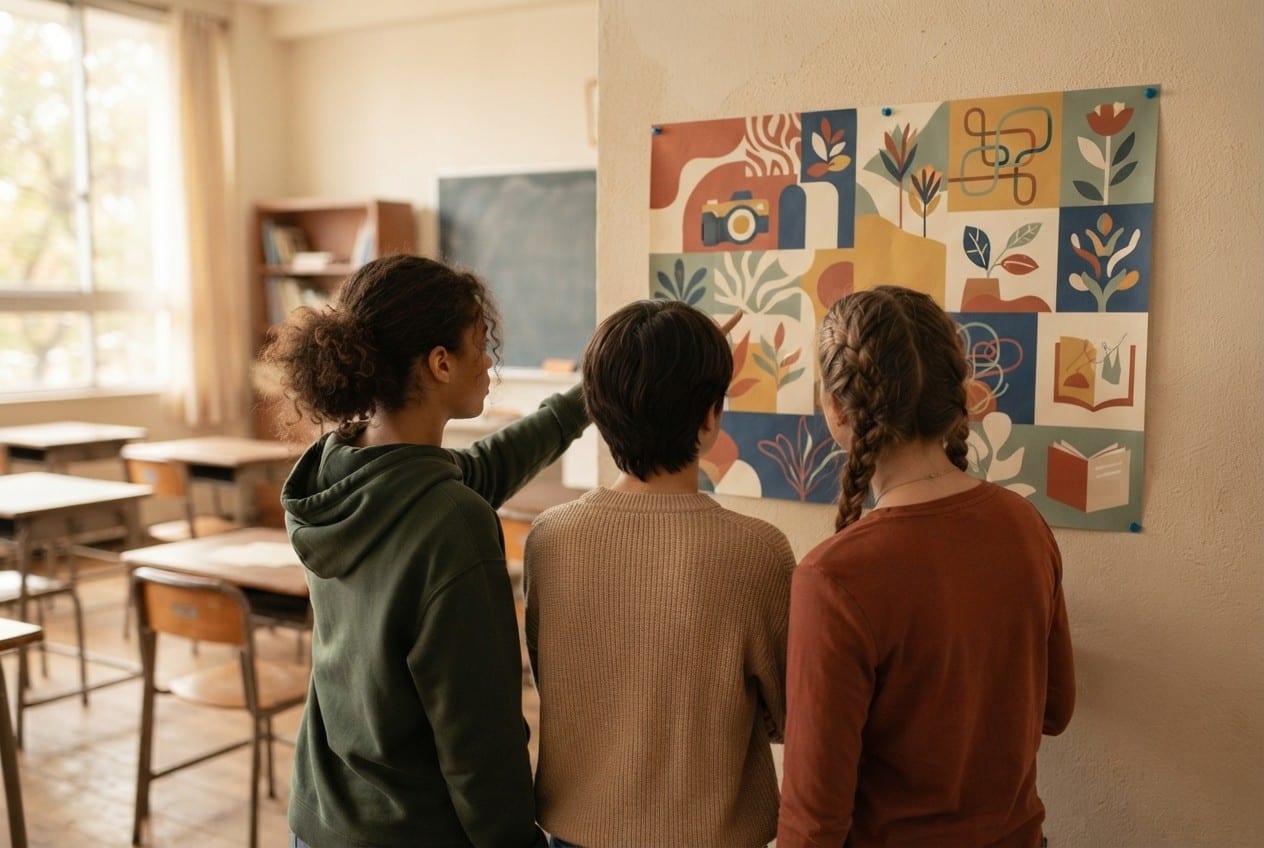

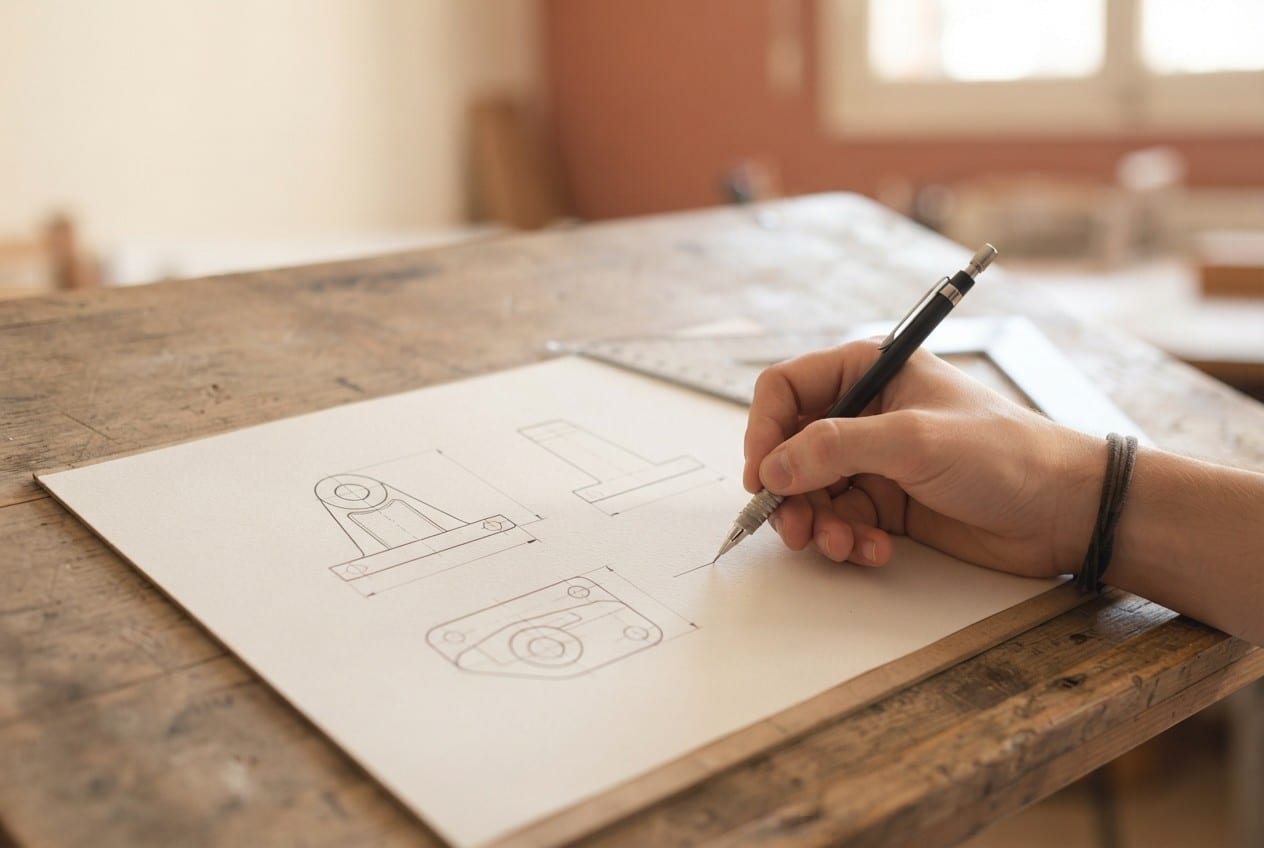
Know where the class stands to decide what to do tomorrow.
- Baseline assessment.
The teacher creates a session and students join with a code, no account needed. - Class report.
Level distribution, item-by-student heat map and the weakest sub-skills. - Targeted activities.
Where more hands-on material, more practice with 3D pieces or more image reading is needed. - Measure progress.
The parallel follow-up test checks after a unit whether the class has really improved.
It also helps to spot students who need support and to watch for possible gender gaps in mental rotation, which can be closed with guided practice.
Built on recognised research frameworks.
Where it comes from
- Visual reading: the Common European Framework of Reference for Visual Competency (CEFR-VC, ENViL network) and Kárpáti's eDia diagnostic tests.
- Spatial reasoning: the three classic constructs (mental rotation, orientation and visualisation), with items of the same type as the MRT, PSVT:R or the Mental Cutting Test.
- Descriptive geometry: the Visual Arts and Technical Drawing curricula, with original items.
All items are original: no copyrighted test is reproduced.
How it is validated
The test is in its pilot phase. With real answers, the app calculates the difficulty and discrimination of each item, and the reliability of each block (Cronbach's alpha). Items that do not work are revised and the level cut-off points are recalibrated.
Until then, levels are indicative. There are no official norms for students in Catalonia.
Want to use it with your class?
Sign in with your school account, create a session and share the code. Student data is minimal: a name or nickname and the answers.